Showing posts with label Can-bus telematics device. Show all posts

Friday, 24 June 2011

Trixi Of The Trade: New Cycling Code Shows Truckers How To Avoid Accidents


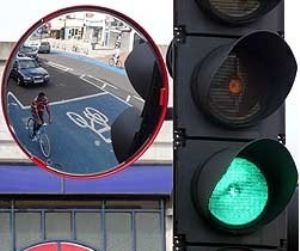
Pic of Trixi mirror: handyshippingguide 

Ask a professional truck, lorry or van driver his or her opinion of cyclists and you are 100 per cent certain to get, how shall we put it, a strongly-worded reply. Some, it's fair to say, regard them as the bane of their day-to-day lives, but most are professional enough to recognise they have as much right to be on the road as them. 

There's no question, however, that driving on roads where cyclists are prevalent does present real challenges to heavy transport drivers. It is all too easy to miss or misjudge their presence - and before you know it a tragedy has occurred. 

Which is why the latest idea from the Freight Transport Association (FTA) is a great initiative. The FTA this week responded to the rising numbers of fatalities and injuries caused to cyclists by heavy freight trucks in London by releasing a new Cycling Code for drivers. The Cycling Code contains a host of measures and gives advice not just to drivers of trucks and vans but also to cyclists, business and local authorities who  manage the roads. 

Specific measures include advice to fleet managers on reporting accidents and near misses to educating drivers about cyclist awareness and the use of Trixi mirrors. 

“Cycling in London has doubled in the last 10 years. As operators of commercial vehicles regularly making tens of thousands of journeys every day to deliver essential goods and service to London residences and premises, we are acutely aware of the risks posed to other road users, especially cyclists," said the FTA. 

“As responsible businesses we wish to take the initiative to promote a Cycling Code of best practice to be followed by vehicles." 

Of course, telematics can play its part in helping to maintain the safety of both cyclists and truck and van drivers. Detailed tracking and GPS data can reveal and alert drivers to areas where cycling activity is heaviest, where accidents have occurred in the past and where Trixi mirrors are in place on street furniture and in particular on traffic signals. In other words, telematics add crucial - and potentially life-saving - depth and detail to the driver's knowledge of the city environment in which he or she is operating.

For more information on how iBox technology can help your fleet deal with these issues contact steve.green@iboxtechnology.co.uk

In the meantime, if you want to read the new cycling code in full visit this link: 
http://www.fta.co.uk/export/sites/fta/_galleries/downloads/cycling/fta_cycling_code.pdf

Friday, 10 June 2011

Caught In a Spot: New Roadside Fines Underline Importance Of Tracking And Telematics


Breaking transport laws became a lot more expensive this week as haulage companies started to be be hit by new, £80 release fees to get back vehicles seized under VOSA immobilisation notices.
Vehicles on the UK's roads are regularly pulled over and hit with on-the-spot immobilisation notices by VOSA officers for a variety of reasons, from mechanical defects to failure to pay fixed penalties. Trucks, vans and lorries are also taken off the road when drivers tachographs or other telematics reveal that they have been driving for dangerously long hours. 
The £80 fines are payable immediately by the transport companies rather than the drivers themselves, with the VOSA officers able to process card payments at the roadside or over the phone. But the bad news for hauliers and transport bosses is that vehicles won't be allowed back on the road until any defects are corrected, making breaches of the law far more expensive than just the fine itself. 
All this once more underlines the importance of telematics and vehicle tracking to fleet managers. Monitoring and analysing the sea of data telematic devices can provide is the best way to ensure that vehicles and drivers are within the law at all times. Bosses can keep track of all sorts of data - from driver hours to driving patterns via analysis of harsh braking and acceleration. 
For more details on how ibox technology can help you stay within the law, contact us today.  

Wednesday, 25 May 2011

Who You Gonna Call? Stressbusters - Why Tracking And Telematics Devices Are Good For Men's Health

It seems there's nothing more certain to get the male blood pressure going than sitting in a traffic jam. An intriguing, new scientific study has found that men's stress levels soar seven times higher than women’s when they are stuck in stationary traffic.

In a major study of hundreds of drivers, psychologists measured levels of stress chemicals in the saliva of male and female volunteers sitting in snarled up traffic. They discovered that men are far more likely to get hot under the collar about wasted and lost time - while women deal with the stress and pressure by switching off and listening to the radio.

While female stress levels went up by an average of just 8.7 per cent as they waited behind the wheel, the levels of chemicals in men went shooting up by 60 per cent.

According to the scientists behind the study, one explanation for the wildly differing results is that men are more reliant on the ‘fight or flight’ response to stressful situations. In other words, men want to either deal with the problem head on or walk away. In a traffic jam, you can't do either - hence their frustration.

Psychologist David Moxon, who carried out the research, warned that frustration could have a serious impact on male drivers making them drive erratically - and therefore dangerously. They also warned that most men are unaware of their rising blood pressure and the fact that it is putting their welfare - and that of other road users - at risk.

‘The fact that they are not always aware of this could indicate that driving regularly in dense traffic could have a profound effect on their health,' Moxon explained.

The best solution to the problem, he suggested, was that drivers avoid congestion altogether by planning ahead and using telematics devices.

For ordinary drivers that may mean a Sat Nav. For a professional driver in a truck or van, however, the best option is a tracking device. iBox technology devices like the 'Tele-mate' in particular allows drivers to stay in constant two-way communication with their fleet managers, who can alert them to traffic problems.
It's another way in which telematics devices not only looks after the safety and efficiency of vehicles, but also helps protect the health of drivers.

For more information about how our devices can help your business contact iBox technology today.

Friday, 18 March 2011

Crimestoppers - How Telematics Can Plug The Gap Left By The Scrapping Of TruckPol


There was widespread disappointment in the UK transport industry this week when the Home Office announced its plans to cut funding for TruckPol, the specialist police unit set up to fight crime in the haulage industry.
The Government has decided that it can no longer provide the mere £50,000 a year it takes to run the service - despite that fact that recent statistics revealed a massive 59 per cent rise in lorry thefts.
The unit will now have to rely on private donations. TruckPol head, DC Sue Coutts, told roadtransport.com the unit has enough private capital to survive for at least 12 months, but that more money will be needed if it wants to continue fighting freight crime from April 2012. "Revenue raised from our private sector sponsors and EU project money continues to provide enough funding for TruckPol to continue. We are not losing any staff in the unit and, if anything, the unit is working well. Obviously though, now, more than ever we need more sponsors."
The cut seems pretty small-minded and couldn't be more badly timed. But it does present an opportunity for the telematics industry to step in and help combat the rise in lorry crime by producing tracking equipment that protects hauliers and their cargo.
At iBox technology our 'Check-mate' device has proven a popular and effective tool in helping fleet managers and drivers. system. Our system uses barcode or RFID technology to monitor stock movements on or off the vehicle at the POD. It can also be used to check on board inventories, such as plant and equipment, and allows drivers to conduct vehicle checks which generate exception reports that are sent directly via email to the fleet manager.
With private industry left to police the growing problem of lorry crime for itself, devices like the 'Check mate' seem certain to play a vital role. To find out more about the 'Check mate' and our other devices, contact iBox.

Thursday, 17 March 2011

Introducing the iBox vehicle tracking 'Mates' Part 2 - the fuel-saving 'Eco-mate'

It's an interesting reflection on the current economic conditions, that one of our most popular tracking devices is now the innovative 'Eco-mate'.

With fuel prices rising seemingly every day- and the threat of an oil crisis brewing in the Middle East - many transport and logistics companies are finding that this device is an invaluable asset when it comes to managing fuel and vehicle efficiency.

The Eco-mate combines a live, web-based Canbus interface with our Trac-mate technology and features an impressive range of functions which allow managers to monitor variables from fuel consumption to driving and braking habits, harsh acceleration and excessive idling.

In a cost-conscious business environment, it's little wonder it is attracting so much attention. Contact us if you would like more information.

Features include:
Live Canbus which includes :
MPG
Harsh acceleration
Harsh Braking
Use of cruise control
Idling
Fuel used idling
Total fuel used
Engine hours
Distance to next service
PLUS:
Live web based .
Tracking
Snail trail
Full auto reports in csv , pdf and excel
Mapping
Compatible with standard Garmin Sat nav.
Able to monitor vehicle ancillary equipment ( cranes, lifts etc)
Geo-fencing including polygon
Auto alerts in sms or e mail format
Find nearest vehicle function

Wednesday, 16 March 2011

Snow Coach : Five Things Last Winter's Big Freeze Taught Fleet Managers About The Role Of Vehicle Tracking And Telematics

A lorry battles with snow and ice at Glenfin,
 Scotland, last Winter. Pic: Highland Radio. 
Spring is in the air, and memories of one of the hardest Winters in living memory are finally receding. The cost of December and January's severe snow and ice to the British economy ran into the billions of pounds. From the High Street to the industrial estates and, in particular, on the roads, UK businesses took a heavy hit. 

So now seems like as good a time as any to take stock of what happened - and the lessons we can learn from last Winter. 

One clear lesson we learned at iBox technology was that modern telematics and vehicle tracking devices can make an enormous contribution to vehicle and driver safety and security during cold snaps and Arctic weather. In some instances, sophisticated tracking technology can even save lives. 

Here are 5 key lessons we learned - and some tips on how to help transport companies and fleet managers  deal with the next big freeze. 

1. Location 

There's no question. All vehicles should be fitted with basic tracking that allows the fleet manager to pinpoint all his drivers’ locations. By integrating this with weather and traffic information monitored in the office, this can help the fleet manager efficiently manage his or her fleet's progress and safety during bad weather. 

"All vehicles should be equipped with basic telematics which enable you to track the exact position where your driver is located. In Arctic conditions you can also look at the weather and road conditions in that area and keep your driver up to date on changing local, situations. You can then take decisive action, either to re-route or even cancel your driver’s assignment,” says iBox director Steve Green. 

2. Duty of Care 

As a fleet manager, you have a duty of care to your drivers. Telematics help managers fulfil this responsibility during bad weather. “Telematics devices ensure you are always aware of your driver’s location, but more importantly that you can interpret what is going on at that location. If you see that your vehicle isn't moving or you detect that it has had some kind of accident you can alert the emergency services. Engine monitoring and temperature sensing within the vehicle cab can also allow the fleet manager to monitor the safety and security of a driver overnight,” explains Green. 

3. Communication with Customer 

Bad weather causes chaos for customers, as many logistics and haulage companies learned to their cost again last Winter. Delivery times can be disrupted or - even worse - cancelled. Telematics can help ease the prolems that arise. “At iBox we have a Timeline function which shows the progress of all vehicles within the fleet on a single screen. This allows managers to keep their clients up to date with the progress of deliveries,” Green explains. “Customers are always sympathetic to problems during bad weather, provided they are kept up to date with the situation. This helps ensure that always happens.” 

4. Two Way Communication

In dangerous conditions, communication between cab and office is vital. Drivers need to know what is happening back at base, and the fleet manager needs to know what is happening on the ground. It needs to be a two way conversation. 

The iBox Telemate device combines a standard Garmin Sat-Nav, Can-bus with a mobile phone and remotely updated phone book which answers automatically when called. It also allows drivers to speed dial any one of up to fifty numbers that are remotely input to the box. “In Wintry weather, the manager can forward the driver with emergency numbers. Equally, if a family member needs to make an urgent private call to the driver, they can do so,” says Green. IBox‘s ‘Task Manager’ function also allows the fleet manager to remotely update the Telemate with new or amended job or route details. “Sometimes it’s important that the driver focuses entirely on his vehicle. This allows us to send important data direct to the Sat Nav. The driver will then get a message from his Sat Nav directing him to the nearest service area or fuelling location, without having to talk directly to the office,” says Green.  

5. Remote Fuel Monitoring 

As we saw last Winter, fuel supply lines can be severely disrupted by heavy snow and ice. A telematics device can also relay fuel level information back to the fleet manager. The office is then able to compare the vehicle’s fuel needs with the location of re-fuelling locations that are stocked and open for business so as to ensure the safe completion of the driver’s journey. “If a driver is running low on fuel but is heading towards a station that has run out of fuel supply, that driver needs to know about it - and fast,” says Green. “Again the two-way nature of our communications devices mean that this information is relayed between the office and the vehicle smoothly and safely.” 


Severe Winter weather can create extreme problems for drivers and fleet managers. The kind of heavy snow and ice we saw back in December and January can cause accidents, delays, road closures and serious disruption to a transport business. Deliveries can be disrupted, drivers can get stranded - or even worse. 

That’s the bad news. The good news, however, is that with intelligent use of modern technology, fleet managers can minimize the financial - and human - cost of the big freezes. Give us a call if you want to start preparing for the next one. 
Thursday, 3 March 2011

Vehicle Telematics Key To Keeping Track of Fleet Staff Safety

The first conviction in the UK under new corporate manslaughter legislation has given fleet managers a sharp reminder of the importance of keeping their staff, vehicles and equipment safe.


As Fleet News this week reported, a company called Cotswold Geotechnical Holdings was found guilty of the death of a 27-year-old geologist named Alex Wright, who died in September 2008 when a trench in which he was working collapsed. The firm was fined  £385,000 - 116% of its annual turnover - for the crime. 


The conviction is being viewed as a real warning shot to companies who are lax in meeting their health and safety obligations.  
“This conviction and the penalty handed down by the court should make less safety conscious firms – both large and small – sit up and think,” said Roger Bibbings, RoSPA’s occupational safety adviser in the wake of the ruling. "Those who can reassure themselves that their health and safety management systems are effective have nothing to fear.”
David Faithful, lawyer for Essential Risk Consultancy, told Fleet News: “Despite years of warnings, many companies are still woefully under-protected when it comes to managing driver risk.


All this goes to underline the important duty of care all transport and logistics company's face. And it reinforces the role that telematics can play in helping them achieve this. 


At ibox technology, our range of 'mates' can help fleet managers track key pieces of data, from drivers' working patterns to break times while also monitoring their driving behaviour via analytics such as harsh braking patterns. It all adds to the fleet manager's toolbox of controls when it comes to exercising a duty of care over his or her drivers.  


"Every transport company, no matter how big or small, has a legal responsibility to its staff and this new legislation makes that duty an even greater one," said ibox technology's director, Steve Green. 


"So the more information our tracking devices can provide them in terms of where their staff are located, how long they have been at work, whether they are taking proper breaks and driving responsibly, the more chance fleet managers have to fulfil that responsibility properly." 

Contact iBox for more details about how our 'mates' can help you improve and monitor health and safety in your company.  

Wednesday, 2 March 2011

Long Distance Love - How Vehicle Tracking Can Care For Your Bottom Line

Keeping fleet costs down is more essential than ever in the current economic climate - especially for small and medium-sized companies that are running their businesses on ultra-tight margins. Every penny saved helps the bottom line.

Telematics and vehicle tracking can play an absolutely vital role in keeping transport costs under control. And, as we've discovered, they often highlight savings that would not have otherwise occurred to fleet managers.

We saw a recent example of this when a large service company conducted a detailed analysis of their van fleet's activities.

The company, which transports industrial equipment across the length and breadth of the UK, were using iBox technology's hugely popular 'Trac-mate' device. 'Trac-mate' allows fleet managers not just to efficiently track and analyse vehicle movements 'live', but to produce detailed, printed reports as well.

During a review of the travel patterns of one van driver, the fleet management team noticed that he was making a round trip of exactly 400 miles between Stafford and Weymouth in Dorset three times a week.

When they asked the driver to explain the trips, he revealed he was travelling 200 miles each way to see his girlfriend. The driver wasn't actually breaking any rules. Private use of vehicles was allowed - and declared to the tax man.

This, however, was another story. The driver was racking up no less than 1,200 miles each week - and costing the company a small fortune in fuel.

As a result, the company revised their private mileage rules so that employees were only allowed to use vehicle's for 100 miles of private mileage per week.

The story had a happy ending for both sides. The path of true love still ran smoothly and the driver carried on visiting his girlfriend, using his own vehicle or taking advantage of his private mileage quota when on deliveries in the southwest of England.

And the company were able to shave thousands of pounds off their weekly fuel bill. All thanks to their telematics.

Friday, 18 February 2011

How To Stop Forklifts Being Lifted! The Genius Of Geo-Fencing

Fleet managers and vehicle owners are always facing new challenges. And we, as suppliers of tracking equipment, have to move with them.

An important recent development has been the addition of 'geo-fencing' to our vehicle tracking equipment.

Geo-fencing very simply allows users to set the geographical parameters within which a vehicle or piece of equipment should be operating. On the one hand it can show that vehicles have reached designated delivery locations. On the other hand, it can reveal that a vehicle or piece of equipment has strayed out of a designated zone, ensuring the fleet manager knows about it immediately.

At iBox technology we've seen this technology applied in a variety of ways. In the haulage and logistics business, for instance, it allows transport companies to detect - and if necessary, prove - that a delivery has arrived at the correct destination.

One example of the usefulness of this came when a delivery firm was charged a heavy penalty by a major supermarket chain for not having delivered a consignment on time. After talking to its driver, the delivery firm challenged this. They argued that he had been on the supermarket's premises, but had been held back from emptying his load by the warehouse manager's decision to give another, later delivery priority because of its perishable load. They were able to prove the driver was on the premises by showing them the geo-fencing data which showed that the lorry had arrived ahead of rather than behind schedule. The penalty was refunded.

Another example came when we fitted geo-fencing to a fleet of forklifts being operated by a warehouse company on a large, industrial estate. They had suffered a series of disappearances of their forklifts. One or two had been stolen and subsequently recovered. But others had simply gone astray. Within a week of having our geo-fencing equipment fitted, the company had discovered the cause of these mysterious disappearances.

They found that workers were using the forklifts to travel around the estate, far from where they should have been working. The new geo-fencing kept showing them leaving the designated operation zones, often to do 'private work' or even make social calls. Workers were often simply abandoning the forklift trucks at the end of the working day.

When they discovered this practice they launched a search of the industrial estate and quickly found the remaining 'lost' forklifts. Needless to say they didn't go missing in that way again - and staff didn't go wandering from their workplace as much either.

Friday, 11 February 2011

Inspector Gadget! - How Telematics Can Help Track Down The Truth

Modern telematics and tracking devices offer much more than simple messages about a vehicle’s location, speed and travel routes. They can also act as digital detectives, as Steve Green explains:

“A while back we fitted some of our Eco-mate devices to a fleet of 7.5 ton trucks available for rental with one of the country’s biggest fleet operators. Some of the trucks were rented out to a well known transport company that distributes fruit and vegetables to pubs and restaurants all over the UK. The owners signed the contract, sent out the lorries and left the delivery company to get on with their business. As far as they were concerned, they were doing just that.

“As part of our service, we routinely monitor the data that is streaming from all our clients’ vehicles. One day, whilst monitoring this particular fleet of trucks, we noticed something odd.

“One of the trucks had stopped and remained parked at a location in East Sussex. It remained there with its ignition off for several hours. Using the map function that we have built in, we were able to zoom into the location and saw that the lorry was parked up in a lay by. We assumed it was some kind of problem, perhaps with the driver.

“When we looked again the following day, the data stream showed that the vehicle had changed location and was now in Leighton Buzzard. From the fuel readings we could see that it had done this without using any fuel. Quite obviously, it had for some reason been towed or transported there. It remained in Leighton Buzzard for three days.

“Now it just so happened that we knew that the company which had hired these trucks had a service garage in Leighton Buzzard. So it was then that we started to put two and two together. There had clearly been some kind of accident and the lorry had been towed or transported to the company’s garage to fix it.

“In a routine conversation with the client who owned the trucks, we mentioned that we thought one of their trucks had been in an accident or broken down.

“As far as they were concerned the truck was travelling around the country making deliveries as normal.”

“No, we’ve not heard anything about that,” they replied. “If there was  an accident, the client has to inform us automatically. It’s in the contract. You must be mistaken.”

“In the end, however, we were proven right. It turned out that the truck had been involved in an accident in East Sussex and had been transported back to Leighton Buzzard where it was fixed up.

“It highlighted an aspect of telematics that we hadn’t until then considered. By interpreting and analysing data properly, we can highlight areas that wouldn’t ordinarily be identified. In this case, the company that had hired the trucks from our client had been keeping them in the dark, in breach of their contractual obligations to inform them of any problems or accidents.

“In a way, tracking devices are digital detectives. I’m sure that won’t be the last time we use them to solve a mystery.”

Monday, 8 November 2010

Budget Time. How Telematics & Vehicle Tracking Can Deliver Huge Savings & Efficiencies

It's that time of the year again - fleet managers up and down the country are putting together their budgets for the coming year. As we reveal in our latest press release, iBox Technology is helping companies of all sizes achieve significant savings. Here's an extract:
A whole range of clients have benefited from using iBox Technology's innovative products. These include:

- a small west country company, running a fleet of six, two-man vehicles, whose costs were slashed by an instant £8 per man, per day (£2,000 a month), by using iBox’s Trac-mate device.

- a large, urban local authority, who have been able to monitor and manage their fleet of 50 waste disposal trucks and street-cleaning vehicles, potentially saving hundreds of man hours - and tens of thousands of pounds - in the process.

- a large, 3PL provider who have used iBox’s Tele-mate device to slash their communications and phone costs as well as optimising shift patterns and highlighting driving issues within part of its 1,200 strong fleet.

“A lot of fleet managers are talking to us at this time of the year as they put together their budgets for the coming twelve months. Whatever the specifics of their fleet, there are areas where each of them can make cost and efficiency savings,“ says iBox Technology director, Steve Green.

“Whether it’s improving their trucks’ fuel efficiency via our Eco-Mate or streamlining their communication and task mangement systems via our Tele-Mate or Task-Manager, we’ve got the technology to help. And in these cost-conscious time we can make the difference between going places or going under.”

iBox Technology - Budget Time. How Telematics & Vehicle Tracking Can Transform Fleet... - MyNewsdesk

Tuesday, 14 September 2010

New Version of iBox technology's 'live' Can-bus winning orders


Sales of our unique 'live' Can-bus device are exceeding our expectations. Customers are telling us that they like the fact it delivers 'today's data - today'. Steve Green has talked about it in detail in a new Press Release. He says: 

“As far as we aware, ours is the only system that gives you live data, connecting the cab to the manager’s office in real time. With our live interface it’s all there for you. If you click on the icon or link for a particular vehicle it will show you the fuel consumption, total fuel used, the average speed, its location, everything you need to know.

A transport manager can take a look at this and see, for instance, that a driver has made six harsh braking manoeuvres in the space of half an hour. He can ring the driver up immediately to find out if there’s a problem.

It still gives the fleet manager the option of generating a weekly report and will provide him or her with a plethora of information. But the difference is that, rather than waiting for the start of a new week to analyse last week’s data, we provide immediate information. We provide today’s data, today.”

Read about it in more detail here. 

Friday, 6 August 2010

Meet The Ultimate Executive Assistant - The Sat-Nav PA

Ever feel lost without your PA? Ever wish he or she could be running your life wherever you are?

A Midlands businesswoman is pioneering a unique, new executive tool that may provide a solution -  a sophisticated, Sat-Nav PA built into her car‘s dashboard.

Like many top executives, Diane Williams, Operations Director of  the Coventry and Warwickshire Chamber of Commerce, leads a hectic and meeting-filled week. New appointments are constantly being added - or removed - from her diary by her PA, often while Dianne is tied up in other meetings. As a result she is constantly relying on her office-based assistant to phone, text or email her with details of where she needs to be next - and when.

In an attempt to simplify her life, Dianne agreed to trial a new device by innovative UK telematics and fleet management company iBox technology.

iBox specialise in providing fleet managers with live data on their vans, trucks and lorries. Their boxes deliver a mass of live information - from a vehicle’s location and speed, to its fuel consumption, load weight and even its driver’s braking habits. They also allow a two-way communication between the vehicle and the office.

iBox adapted a special version of their Trac-Mate device for Williams, integrating it into her car’s Sat Nav. The device allowed her  PA to track her exact whereabouts - as well as her mileage, start and stop times and speed - as she got on with her week’s work. It even provided a ‘snail trail’ of where she had been that week.

Crucially, however, it also allowed two way communication and task scheduling between her PA’s computer and the in-car device so that whenever Dianne climbed into the driver’s seat and switched on the ignition, she knew where her next meeting was and what time she needed to be there.

Dianne was delighted with the impact the device had on her working life. “I’m in and out of the office all the time, going to lots of meetings, not usually that far from each other. I will often have my telephone off so if the next meeting is cancelled or there is a change of destination I may not pick that information up,” she explained.

“Even if you have your Blackberry it takes time to get the details of a change of location. You then have to go to a map website and get directions. It can slow you down.”

The iBox device transformed her working life.

“It was like having my PA in the car. She was able to manage my diary remotely. It left me free to focus on the things that are important, not be distracted by the worry of where I had to be and how I was going to get there,” she said. “I would switch on my ignition and the device would tell me where I was going next and tell me how to get there. It was a very efficient way of managing my time.”

Dianne believes devices like this have a number of benefits. “Nobody is carrying any fat in their staffing at the moment. If you put too much pressure on too few people you are going to have problems. You have to help them manage their time and provide them with access to information quickly. This allows you to achieve that,” she said.

“Secondly, there is a safety and security issue for women. As a woman going out all the time, this allows people to know where I am. I felt safer when I had this in my car. It also has real benefits from a corporate responsibility point of view. As a company, you are more able to protect your staff,” she said. “I’d thoroughly recommend this kind of technology for all sorts of businesses.”


For more details on this story click here. Or click here to read it in full at mynewsdesk.com