Showing posts with label telematics. Show all posts

Monday, 6 February 2012

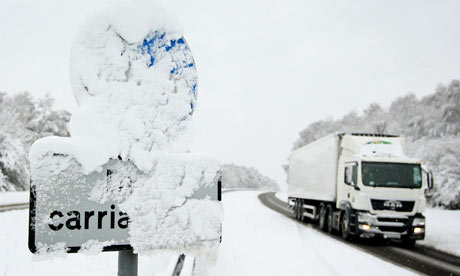
Snow Joke - Why Telematics Really Can Save Lives In Arctic Conditions

With snow and ice once more causing havoc on Britain's roads, it's worth reminding ourselves of the advantages that telematics provide when the weather turns Arctic.

As we explained in detail in what has become our most popular post, there are at least five, key advantages telematics can provide. Tracking devices enable fleet managers to:


  • - accurately locate drivers and vehicles in difficult driving conditions
  • - exercise their duty of care and alert emergency services where necessary
  • - communicate with and update clients regarding the status of deliveries
  • - establish a two way communication channel between office and cab
  • - remotely monitor fuel levels and direct drivers to appropriate refuelling locations in bad weather


Contact us for more details about how you can keep your fleet and your staff safe in arduous Winter conditions.

Monday, 6 June 2011

Google Vehicle Tracking Guide - by ibox


We're always on the look-out for new ways to share our knowledge and help fellow transport professionals. So we've begun adding to Google's exciting 'knol' knowledge base with the first of what we anticipate will be a large collection of articles and guides on telematics and vehicle tracking. Visitors are already popping on to our pages in large numbers. It's early days yet but we hope to build it into one of the biggest and most important online resources for fleet and transport managers. Take a look here.

Thursday, 19 May 2011

Back on Track? Transport Industry Has Cause For - Cautious - Optimism.

Don’t speak too soon, but there are signs of a small recovery in the global transport industry, well, for some companies, at least.

According to the latest statistics, global transport and logistics revenues increased by 15% last year to $197.8bn (£121.20bn). 

That's the good news. The bad news is that, in real terms, this means that industry revenues have barely shifted from where they were in 2007.

And it appears there are certain areas of the industry that are faring better than others.

The figures, published in Transport Intelligence’s Global Transport & Logistics Sector Leaders 2011 report, reflect the performance of 19 major companies including DHL, Wincanton and Kuehne + Nagel.

It found that industry profit margins remain wafer thin at less than 5% and suggests that while these profits might be enough to keep “low asset” operations going, they spell danger for big logistics firms with their own fleets.

"The industry needs to increase its margins in 2011 and beyond," says TI analyst David Bagshaw. "2010 has seen a good recovery for most of the industry, but it still has some way to go.”

The report suggested that the worst hit part of the industry is haulage, which hasn’t pulled out of recession yet and is suffering continued profitability problems.

All this, of course, underlines the crucial role telematics and vehicle tracking can play in business. At iBox technology, we are seeing that our range of mates is delivering significant savings in all sorts of areas - from increased fuel efficiency to staff rota savings. Why not give us a call to discuss how we can save you money in these challenging economic times.

To Russia With Love - How iBox Helped Track A Truck To Chernobyl & Back

On Track: The Chernobyl 2000 convoy on its way to Belarus.

We are always hearing about unusual applications of our tracking equipment and leading hire company Watts Van and Truck have told us about one of the most extraordinary yet.

Back in April, Watts' Gloucester depot fitted our vehicle tracking equipment to a brand, new £80,000 demo DAF articulated truck that was destined for Russia, well, Belarus to be precise, and the area around Chernobyl, scene of the devastaing nuclear reactor accident back in 1986.

Watts had generously loaned the truck to Chernobyl 2000, a Worcestershire based charity who run humanitarian aid convoys to Belarus each year.

Watts were happy to provide their vehicle to the charity, but understandably they wanted to be sure it was secure as it made the 1,300 or so mile journey through eastern Europe. So they fitted an iBox technology ‘Trac Mate’ to the cab, allowing them to track it every mile of the way. It gave them the peace of mind they needed while the valuable vehicle was out of their sight. And it allowed the charity to get on with their important work.  

As the charity explained: “Belarus was the country most affected by the Chernobyl disaster of 1986. Many of us remember the name Chernobyl but few of us realise how it has changed the lives of so many, even those who weren't born when it happened. Between sixty and seventy five percent of this fallout landed on Belarus making them the worst affected country. One fifth of the land mass of Belarus was contaminated beyond recommended levels and 99% of the land is still contaminated to some degree. The people of Belarus live, eat, drink and breathe radiation.” 

The convoy made it to Belarus delivering a large supply of clothes, toys and other items to children and families there. It arrived safely back in the UK at the end of April. We are quietly proud of our involvement in the project and are delighted it all went well. To visit the charity's website click here.

Wednesday, 30 March 2011

Tanks For Nothing: Soaring Fuel Thefts Making Life Even Tougher For UK Transport Firms


As if the UK's transport and haulage industries haven't got enough to cope with, they now face a serious and costly new threat - fuel theft. 
Siphoning diesel from lorries is rife at the moment, with the number of reported crimes soaring. 
A survey by the RHA, Road Haulage Association, found that almost 60 per cent of those polled had been victims of fuel theft in the past 12 months. 
Chrys Rampley, RHA security and infrastructure manager, told roadtransport.com "Fuel thefts in the road haulage industry have always been a big issue, but the spike in diesel costs will make operators' margins suffer even more than usual."
Rampley said that while some thieves were stealing diesel for personal use, an increasing number were selling large amounts of fuel on the black market. The RHA survey backed this up, revealing a hike in the number of thefts in the region of 1,000-1,500litres, compared to the average 100-600litres that had been stolen in the past. 
More than half of victims in the poll said diesel had been siphoned directly from lorry tanks, while the rest had been taken from storage tanks in yards and compounds. 
Perhaps not suprisingly the most vulnerable locations and times are lay-bys at night and in the late afternoon. 
One leading haulier, David McMurray, MD of Accrington, Lancashire company McMurrays Haulage told roadtransport.com. "We have been targeted a handful of times so far in 2011. It has been a problem for the industry for a long time, but fuel is becoming like liquid gold-dust, so I'm not surprised to hear the number of incidents has risen again."
McMurrays has fitted its fleet with anti-siphoning products, but there are doubts over whether this is effective. The RHA said that some anti-siphoning security was proving counterproductive because thieves went well-equipped and tore the fuel cap off the tank, which left the whole tank in need of replacing at even greater expense. 
This is where telematics can play its part. Of course, you can never stop a determined criminal, especially when they operate in well organised - and potentially dangerous - gangs. But devices like iBox's 'Check-Mate' and 'Eco-Mate' can help fleet managers keep abreast of what's happening remotely by helping them monitor variables, from fuel levels to the security of vehicles in lay-bys. If drivers are targeted by gangs, the 'Tele-mate' also allows two way communication between driver and fleet office and, if necessary, the police. 
On the subject of which, we would expect the police to help combat this alarming rise. And, to be fair, the specialist lorry crime unit TruckPol has re-introduced the reporting of fuel thefts under 1,000 litres after stopping the service back in July 2009. 
But as we reported in a previous blog, TruckPol now faces severe funding cutbacks. It all means that hard-pressed hauliers are going to feel more embattled - and abandoned - than ever. 

Tuesday, 29 March 2011

Euro-Trash - Why The UK Transport Industry Needs To Wake Up To Europe's Future, And Why Telematics Will Be Crucial

Europe's roads will change dramatically between now and 2050. 

Transport groups and UK politicians have been trashing the European Commission's newest plans to rid cities of petrol-fueled vehicles by the year 2050. 
The plans were revealed in a white paper published yesterday in which the EC called for  €1.5 billion in infrastructure investments to create a 'Single European Transport Area' over the next two decades. The white paper also calls for a swathe of  pro-green measures to ensure the EU cuts its transport emissions by 60 percent by 2050.
Suggested moves include laws requiring road freight transport travelling in excess of 300km to be shifted to rail or waterborne transport.
UK politicians dismissed the document - basically telling Brussels to keep its nose out of British roads and town centres. "We will not be banning cars from city centres any more than we will be having rectangular bananas," said UK transport minister Norman Baker.
And Ivan Hodac, secretary general of the automobile industry's trade association (ACEA), called the proposal to shift long distance haulage from the roads to rail and water "a mistake". 
But there's no question that the EC is serious about introducing measures to slash emissions and rid its cities of heavy vehicles. And quite frankly, companies have got to face up to the fact that they are going to have to be more careful about planning long distance travel - and not just because of ever-spiralling fuel costs. 
All of which is going to mean that telematics and vehicle tracking devices are going to play an increasingly important part in fleet management. And technology like iBox's popular 'Eco-Mate', 'Trac-Mate' and 'Tele-Mate' will be crucial in this new, more heavily regulated environment, allowing managers to locate their drivers and vehicles, monitor their emissions and fuel efficiency and communicate with them as they travel around Europe's more tightly-controlled road networks. 
For details about how we can help you navigate your way around the Europe of the future, contact iBox or visit our website www.iboxtechnology.co.uk 

Thursday, 24 March 2011

Caution - Dangerous Road Ahead. Why Osborne's Petrol Price Cut Won't Save Fleet Managers From Fuel Crisis.

So the chancellor, George Osborne, had been listening to the transport industry after all.

The big business headline in yesterday's Budget was Osborne's surprise decision to cut 1p off fuel duty with immediate effect and freeze the proposed inflation rise in tax for this year, putting it back to January 2012.

The nine month breathing space was greeted with cautious optimism by the transport industry. But prices on the forecourt are still going to be influenced by oil companies and the evidence is that they are going to be climbing  further because of the situation in the Middle East and the greed of the petrol companies.  


As the BBC reported today, that greed was in evidence again yesterday as petrol stations all over the country apparently increased their prices by between 1p and 2p in advance of the budget, wiping out the benefits of the 1p cut at a stroke.

In other words, Osborne's cut is a step in the right direction, but it's hardly a turning point. And when you look at the way fuel prices have been rising during March, you can see that the relief from the tax cut and freeze may not be the life-saver that some people are calling it.

oil prices


So what do we make of all this? Well, one thing is for certain, with fuel prices forcing more and more haulage and logistics companies out of business and oil prices (above) jumping around all over the place and unlikely to become setttled this year, fuel efficiency is going to remain a make-or-break issue for fleet managers. 
All of which means that telematics devices like iBox technology's popular Eco-mate, which monitors everything from fuel usage to harsh braking and idling time, are going to become even more essential if firms are going to protect their bottom lines.  
For more details about the Eco-mate or our other range of innovative tracking devices, contact iBox technology today. 

Friday, 18 March 2011

Crimestoppers - How Telematics Can Plug The Gap Left By The Scrapping Of TruckPol


There was widespread disappointment in the UK transport industry this week when the Home Office announced its plans to cut funding for TruckPol, the specialist police unit set up to fight crime in the haulage industry.
The Government has decided that it can no longer provide the mere £50,000 a year it takes to run the service - despite that fact that recent statistics revealed a massive 59 per cent rise in lorry thefts.
The unit will now have to rely on private donations. TruckPol head, DC Sue Coutts, told roadtransport.com the unit has enough private capital to survive for at least 12 months, but that more money will be needed if it wants to continue fighting freight crime from April 2012. "Revenue raised from our private sector sponsors and EU project money continues to provide enough funding for TruckPol to continue. We are not losing any staff in the unit and, if anything, the unit is working well. Obviously though, now, more than ever we need more sponsors."
The cut seems pretty small-minded and couldn't be more badly timed. But it does present an opportunity for the telematics industry to step in and help combat the rise in lorry crime by producing tracking equipment that protects hauliers and their cargo.
At iBox technology our 'Check-mate' device has proven a popular and effective tool in helping fleet managers and drivers. system. Our system uses barcode or RFID technology to monitor stock movements on or off the vehicle at the POD. It can also be used to check on board inventories, such as plant and equipment, and allows drivers to conduct vehicle checks which generate exception reports that are sent directly via email to the fleet manager.
With private industry left to police the growing problem of lorry crime for itself, devices like the 'Check mate' seem certain to play a vital role. To find out more about the 'Check mate' and our other devices, contact iBox.

Thursday, 17 March 2011

Introducing the iBox vehicle tracking 'Mates' Part 2 - the fuel-saving 'Eco-mate'

It's an interesting reflection on the current economic conditions, that one of our most popular tracking devices is now the innovative 'Eco-mate'.

With fuel prices rising seemingly every day- and the threat of an oil crisis brewing in the Middle East - many transport and logistics companies are finding that this device is an invaluable asset when it comes to managing fuel and vehicle efficiency.

The Eco-mate combines a live, web-based Canbus interface with our Trac-mate technology and features an impressive range of functions which allow managers to monitor variables from fuel consumption to driving and braking habits, harsh acceleration and excessive idling.

In a cost-conscious business environment, it's little wonder it is attracting so much attention. Contact us if you would like more information.

Features include:
Live Canbus which includes :
MPG
Harsh acceleration
Harsh Braking
Use of cruise control
Idling
Fuel used idling
Total fuel used
Engine hours
Distance to next service
PLUS:
Live web based .
Tracking
Snail trail
Full auto reports in csv , pdf and excel
Mapping
Compatible with standard Garmin Sat nav.
Able to monitor vehicle ancillary equipment ( cranes, lifts etc)
Geo-fencing including polygon
Auto alerts in sms or e mail format
Find nearest vehicle function

Wednesday, 16 March 2011

Snow Coach : Five Things Last Winter's Big Freeze Taught Fleet Managers About The Role Of Vehicle Tracking And Telematics

A lorry battles with snow and ice at Glenfin,
 Scotland, last Winter. Pic: Highland Radio. 
Spring is in the air, and memories of one of the hardest Winters in living memory are finally receding. The cost of December and January's severe snow and ice to the British economy ran into the billions of pounds. From the High Street to the industrial estates and, in particular, on the roads, UK businesses took a heavy hit. 

So now seems like as good a time as any to take stock of what happened - and the lessons we can learn from last Winter. 

One clear lesson we learned at iBox technology was that modern telematics and vehicle tracking devices can make an enormous contribution to vehicle and driver safety and security during cold snaps and Arctic weather. In some instances, sophisticated tracking technology can even save lives. 

Here are 5 key lessons we learned - and some tips on how to help transport companies and fleet managers  deal with the next big freeze. 

1. Location 

There's no question. All vehicles should be fitted with basic tracking that allows the fleet manager to pinpoint all his drivers’ locations. By integrating this with weather and traffic information monitored in the office, this can help the fleet manager efficiently manage his or her fleet's progress and safety during bad weather. 

"All vehicles should be equipped with basic telematics which enable you to track the exact position where your driver is located. In Arctic conditions you can also look at the weather and road conditions in that area and keep your driver up to date on changing local, situations. You can then take decisive action, either to re-route or even cancel your driver’s assignment,” says iBox director Steve Green. 

2. Duty of Care 

As a fleet manager, you have a duty of care to your drivers. Telematics help managers fulfil this responsibility during bad weather. “Telematics devices ensure you are always aware of your driver’s location, but more importantly that you can interpret what is going on at that location. If you see that your vehicle isn't moving or you detect that it has had some kind of accident you can alert the emergency services. Engine monitoring and temperature sensing within the vehicle cab can also allow the fleet manager to monitor the safety and security of a driver overnight,” explains Green. 

3. Communication with Customer 

Bad weather causes chaos for customers, as many logistics and haulage companies learned to their cost again last Winter. Delivery times can be disrupted or - even worse - cancelled. Telematics can help ease the prolems that arise. “At iBox we have a Timeline function which shows the progress of all vehicles within the fleet on a single screen. This allows managers to keep their clients up to date with the progress of deliveries,” Green explains. “Customers are always sympathetic to problems during bad weather, provided they are kept up to date with the situation. This helps ensure that always happens.” 

4. Two Way Communication

In dangerous conditions, communication between cab and office is vital. Drivers need to know what is happening back at base, and the fleet manager needs to know what is happening on the ground. It needs to be a two way conversation. 

The iBox Telemate device combines a standard Garmin Sat-Nav, Can-bus with a mobile phone and remotely updated phone book which answers automatically when called. It also allows drivers to speed dial any one of up to fifty numbers that are remotely input to the box. “In Wintry weather, the manager can forward the driver with emergency numbers. Equally, if a family member needs to make an urgent private call to the driver, they can do so,” says Green. IBox‘s ‘Task Manager’ function also allows the fleet manager to remotely update the Telemate with new or amended job or route details. “Sometimes it’s important that the driver focuses entirely on his vehicle. This allows us to send important data direct to the Sat Nav. The driver will then get a message from his Sat Nav directing him to the nearest service area or fuelling location, without having to talk directly to the office,” says Green.  

5. Remote Fuel Monitoring 

As we saw last Winter, fuel supply lines can be severely disrupted by heavy snow and ice. A telematics device can also relay fuel level information back to the fleet manager. The office is then able to compare the vehicle’s fuel needs with the location of re-fuelling locations that are stocked and open for business so as to ensure the safe completion of the driver’s journey. “If a driver is running low on fuel but is heading towards a station that has run out of fuel supply, that driver needs to know about it - and fast,” says Green. “Again the two-way nature of our communications devices mean that this information is relayed between the office and the vehicle smoothly and safely.” 


Severe Winter weather can create extreme problems for drivers and fleet managers. The kind of heavy snow and ice we saw back in December and January can cause accidents, delays, road closures and serious disruption to a transport business. Deliveries can be disrupted, drivers can get stranded - or even worse. 

That’s the bad news. The good news, however, is that with intelligent use of modern technology, fleet managers can minimize the financial - and human - cost of the big freezes. Give us a call if you want to start preparing for the next one. 
Tuesday, 15 March 2011

Meet The iBox Technology ‘Mates’ Vehicle Tracking Range: No 1 - The Trac-Mate

The iBox ‘Mates’ range provides innovative fleet management solutions designed to increase productivity, reduce costs and improve customer service. Here’s the first part of our guide to the six most popular devices currently on offer:

Trac-mate.

Our hugely popular, entry-level tracking device provides a range of key functions that enable the fleet manager to efficiently track and analyse vehicle movements. It also allows the tracking of anciliary equipment, such as cranes or lifts.

Auto-reporting makes it easy to produce detailed breakdowns of vehicle performance and efficiency, enabling managers to plan and budget their fleet’s activity.

Trac-Mate can also be combined with a Garmin SatNav which includes free two way messaging .

Features include: 

Live web based .
Tracking
Snail trail
Full auto reports in csv , pdf and excel
Mapping
Self-sufficient power so doesn’t drain vehicle battery
Compatible with standard Garmin Sat nav.
Able to monitor vehicle ancillary equipment ( cranes, lifts etc)
Geo-fencing including polygon
Auto alerts in sms or e mail format
Find nearest vehicle function

Wednesday, 2 March 2011

Shark Tale - Jaws Has GPS too!

Here's some jaw-dropping news. It seems like we humans aren't the only creatures with GPS and other high-tech devices to help us navigate our way around the world.


Sharks, apparently, have some kind of in-built navigation system that helps them get from A to B. According to a new, scientific report released today, some species of sharks make 'mental maps' that help them to spot destinations up to 50 kilometres (30 miles) away. 


According to the BBC, American scientists tagged tiger sharks with acoustic transmitters and found that they took directed paths from one location to another. Interestingly other types of sharks, such as blacktip reef sharks didn't display the same behaviour. 


Writing in the Journal of Animal Ecology, the researchers suggest this shows a capacity to store maps of key sites and that this is further evidence that the great fish can navigate, possibly using the Earth's magnetic field.
Previous studies in Hawaii have shown tiger sharks can swim across deep channels to find food-rich shallow banks 50km away.
"Our research shows that, at times, tiger sharks and thresher sharks don't swim randomly but swim to specific locations," said research leader Yannis Papastamatiou from the Florida Museum of Natural History in Gainesville.
"Simply put, they know where they are going." 

Sharks aren't alone in doing this, of course. Tuna, turtles, ducks and geese are reckoned to be able to navigate using the earth's magnetic fields. 


As we say, it seems like GPS devices were around a long time before ibox and the 'tracmate'. 

Long Distance Love - How Vehicle Tracking Can Care For Your Bottom Line

Keeping fleet costs down is more essential than ever in the current economic climate - especially for small and medium-sized companies that are running their businesses on ultra-tight margins. Every penny saved helps the bottom line.

Telematics and vehicle tracking can play an absolutely vital role in keeping transport costs under control. And, as we've discovered, they often highlight savings that would not have otherwise occurred to fleet managers.

We saw a recent example of this when a large service company conducted a detailed analysis of their van fleet's activities.

The company, which transports industrial equipment across the length and breadth of the UK, were using iBox technology's hugely popular 'Trac-mate' device. 'Trac-mate' allows fleet managers not just to efficiently track and analyse vehicle movements 'live', but to produce detailed, printed reports as well.

During a review of the travel patterns of one van driver, the fleet management team noticed that he was making a round trip of exactly 400 miles between Stafford and Weymouth in Dorset three times a week.

When they asked the driver to explain the trips, he revealed he was travelling 200 miles each way to see his girlfriend. The driver wasn't actually breaking any rules. Private use of vehicles was allowed - and declared to the tax man.

This, however, was another story. The driver was racking up no less than 1,200 miles each week - and costing the company a small fortune in fuel.

As a result, the company revised their private mileage rules so that employees were only allowed to use vehicle's for 100 miles of private mileage per week.

The story had a happy ending for both sides. The path of true love still ran smoothly and the driver carried on visiting his girlfriend, using his own vehicle or taking advantage of his private mileage quota when on deliveries in the southwest of England.

And the company were able to shave thousands of pounds off their weekly fuel bill. All thanks to their telematics.

Monday, 28 February 2011

Hole Lot Of Trouble Going On - How Potholes Are Hitting The UK's Transport Fleets Hard


Potholes on a road in Banbury, UK.
It will come as no surprise to anyone who is out on the road on a day-to-day basis - but councils in England have today admitted that they don't have enough money to fix the potholes that are blighting the country's highways. 


Last Winter's bad weather once more created millions of dangerous craters on our roads. Councils say they have increased spending to deal with it and the Department of Transport has pledged £3 billion to fill in the mess.


But even this isn't enough. 

The Local Government Association (LGA) told the BBC that they would face a "huge struggle" to repair holes after the coldest December in 100 years.
Potholes form when water seeps into road cracks and freezes, breaking up the tarmac. The association estimated councils had filled in more than two million potholes following the winter of 2009-10 and faced a similar task this year. 


The problem has huge implications for the transport industry, not least because councils are increasingly facing compensation claims from road users who are affected by badly damaged roads. 


One council, Hampshire County Council, admitted to the BBC that payouts for damage to vehicles caused by potholes almost doubled in a year. The authority paid out about £111,000 in 2009/10 - compared to about £60,000 the year before.
If you are a fleet manager worried about the damage bad roads are causing your vehicles, telematics can play a vital role in monitoring the problem - and making claims. 


Detailed 'snail trails' of vehicle's routes and timings along with readings on harsh-breaking patterns and speeds can be used to build up a comprehensive picture of how a vehicle's progress has been disrupted by potholes. 


Contact us to find out more about how iBox technology's mates can help you chart the damage potholes cause your vehicles.

Friday, 18 February 2011

How To Stop Forklifts Being Lifted! The Genius Of Geo-Fencing

Fleet managers and vehicle owners are always facing new challenges. And we, as suppliers of tracking equipment, have to move with them.

An important recent development has been the addition of 'geo-fencing' to our vehicle tracking equipment.

Geo-fencing very simply allows users to set the geographical parameters within which a vehicle or piece of equipment should be operating. On the one hand it can show that vehicles have reached designated delivery locations. On the other hand, it can reveal that a vehicle or piece of equipment has strayed out of a designated zone, ensuring the fleet manager knows about it immediately.

At iBox technology we've seen this technology applied in a variety of ways. In the haulage and logistics business, for instance, it allows transport companies to detect - and if necessary, prove - that a delivery has arrived at the correct destination.

One example of the usefulness of this came when a delivery firm was charged a heavy penalty by a major supermarket chain for not having delivered a consignment on time. After talking to its driver, the delivery firm challenged this. They argued that he had been on the supermarket's premises, but had been held back from emptying his load by the warehouse manager's decision to give another, later delivery priority because of its perishable load. They were able to prove the driver was on the premises by showing them the geo-fencing data which showed that the lorry had arrived ahead of rather than behind schedule. The penalty was refunded.

Another example came when we fitted geo-fencing to a fleet of forklifts being operated by a warehouse company on a large, industrial estate. They had suffered a series of disappearances of their forklifts. One or two had been stolen and subsequently recovered. But others had simply gone astray. Within a week of having our geo-fencing equipment fitted, the company had discovered the cause of these mysterious disappearances.

They found that workers were using the forklifts to travel around the estate, far from where they should have been working. The new geo-fencing kept showing them leaving the designated operation zones, often to do 'private work' or even make social calls. Workers were often simply abandoning the forklift trucks at the end of the working day.

When they discovered this practice they launched a search of the industrial estate and quickly found the remaining 'lost' forklifts. Needless to say they didn't go missing in that way again - and staff didn't go wandering from their workplace as much either.

Monday, 14 February 2011

Lorry Drivers To Be Hit By Tough, New EU Pollution Laws

The importance of managing a fuel efficient - and environmentally responsible - fleet is going to increase still further if new EU laws come into force. A report in today's edition of European Voice reveals that a new Europe-wide law that could mean lorry drivers are required to pay for the environmental harm caused by their vehicles moved a step closer today.

The law on the taxation of heavy vehicles was approved by ministers this morning (February 14th) and will now go on for approval in the Euro Parliament. 
The proposal would allow EU countries to charge lorry drivers for noise and air pollution caused by their vehicles. This will come on top of new arrangements, which we reported last week, that will allow countries to charge tolls to vehicles from other EU countries that use their road system. 
The new rules would apply to any motorway in the EU, a significant point as national governments have previously objected to attempts to extend the law beyond the ‘Trans-European Network' of EU priority roads. The proposals were not unanimously approved. Italy and Spain voted against the law, while Ireland, the Netherlands and Portugal abstained.
All MEPs are due to vote on the issue in June. 
If the law comes into effect, it will make it even more imperative that fleet managers control their vehicle's emissions. And this will make devices like iBox's technology's eco-mate even more effective and useful. 
The eco-mate allows fleet managers to monitor a wide range of fuel-related data. 

Thursday, 10 February 2011

Lorry Drivers To Be Charged £9 A Day To Drive Britain's Roads

As if spiralling fuel costs, rampant insurance hikes and other factors aren't making it hard enough for transport companies, the Government is now planning to force drivers to pay £9 a day to travel on the UK's road system. 


According to the Daily Telegraph the plan will be rolled out in the Summer with a view to being introduced - via new legislation - by April 2014. 


Now Ministers are promising that lorry drivers won't be worse off because of the scheme. They claim other taxes will be reduced to compensate for the £9 charge. For instance, annual road tax could be trimmed to reflect the difference. 


The aim of the exercise, apparently, is to make foreign drivers pay for the use of UK roads for the first time. They would be charged via a 'vignette' system. According to the Telegraph the haulage industry is behind the idea: 
"We are for it," said a spokesman for the Freight Transport Association. "It's a charge which will apply to foreign hauliers, who should pay for their road use. "But we wouldn't want to be hit over the head twice with road user charging and existing taxes."
The only detail that's unclear is what system would be used to calculate when a lorry was on or off the road. The Government has ruled out a "spy in the sky" system involving compulsory black boxes. 
Sounds like an opportunity for telematics and vehicle tracking specialists. 

Tuesday, 8 February 2011

Telematics Key To Australian Road Safety Says Report

Fleet managers 'Down Under' face legislation that will require them to use more telematics and vehicle tracking devices. 

Australian publication Supply Chain Review reports that the country's National Road Safety Strategy 2011 – 2020 recommends sweeping changes to the trucking industry to reduce the national road toll by 30 percent over a 10-year period. 

The report, which is currently open for consultation, wants an increase in point-to-point speed cameras and a greater role for telematics to monitor speed, mass limits, road damage and braking and handling. 

Friday, 29 October 2010

‘Task Manager’ System Delivers Big Benefits To Fleet Managers

Just issued a news release on our successful Task Manager facility.

The system, which comes as standard in each of iBox’s range of tracking ‘Mates’ and works in conjunction with a standard Garmin Sat-Nav, allows fleet managers to remotely update their vehicles with new or amended job details.

The system is remarkably simple - and efficient. As soon as the driver receives the new or amended job details - and presses ‘accept’ on the Sat Nav - he or she is given the updated destination and route details. The fleet manager is then able to track the progress of the vehicle and the new task via the iBox ‘Timeline’ display, which as well as showing the vehicle’s location, generates an Estimated Time of Arrival that is constantly updated according to traffic conditions.

“The Task Manager system brings several benefits to the fleet manager,“ said iBox Technology director Steve Green. “First and foremost, it removes the need for the fleet manager and driver to be exchanging telephone calls, something that can be hit and miss at the best of times. The manager can amend and add to the scheduled jobs remotely, without having to speak to the driver. And they can do that at any time of the day or night,” says Green.

The system dovetails perfectly with IBox Technology’s other features, in particular its Timeline display, which shows the progress of all vehicles within the fleet on a single screen. “Thanks to the Timeline display, this system allows the manager to monitor the progress of tasks, right down to the driver’s ETA at the client. This also means that the manager can be in direct contact with the client, keeping them up to date with the driver’s progress. It brings a huge improvement in efficiency and communication and helps put the customer’s mind at ease.”

“It’s proving a real hit with our clients, especially 3PL providers,” said Green. “It’s also got significant potential benefits in sectors such as the service industry. So, for instance, a client who has requested a maintenance or service specialist can be kept up to date with precise details about their ETA.”
iBox Technology - New ‘Task Manager’ System Delivers Big Benefits To Fleet Managers - MyNewsdesk

Tuesday, 14 September 2010

New Version of iBox technology's 'live' Can-bus winning orders


Sales of our unique 'live' Can-bus device are exceeding our expectations. Customers are telling us that they like the fact it delivers 'today's data - today'. Steve Green has talked about it in detail in a new Press Release. He says: 

“As far as we aware, ours is the only system that gives you live data, connecting the cab to the manager’s office in real time. With our live interface it’s all there for you. If you click on the icon or link for a particular vehicle it will show you the fuel consumption, total fuel used, the average speed, its location, everything you need to know.

A transport manager can take a look at this and see, for instance, that a driver has made six harsh braking manoeuvres in the space of half an hour. He can ring the driver up immediately to find out if there’s a problem.

It still gives the fleet manager the option of generating a weekly report and will provide him or her with a plethora of information. But the difference is that, rather than waiting for the start of a new week to analyse last week’s data, we provide immediate information. We provide today’s data, today.”

Read about it in more detail here.