Showing posts with label telematics device. Show all posts

Monday, 6 February 2012

Snow Joke - Why Telematics Really Can Save Lives In Arctic Conditions

With snow and ice once more causing havoc on Britain's roads, it's worth reminding ourselves of the advantages that telematics provide when the weather turns Arctic.

As we explained in detail in what has become our most popular post, there are at least five, key advantages telematics can provide. Tracking devices enable fleet managers to:


  • - accurately locate drivers and vehicles in difficult driving conditions
  • - exercise their duty of care and alert emergency services where necessary
  • - communicate with and update clients regarding the status of deliveries
  • - establish a two way communication channel between office and cab
  • - remotely monitor fuel levels and direct drivers to appropriate refuelling locations in bad weather


Contact us for more details about how you can keep your fleet and your staff safe in arduous Winter conditions.

Thursday, 14 July 2011

Won't Get Fuelled Again: 3 Key Ways That Transport Telematics Can Fight Fuel Thieves

Fuel theft is one of the biggest threats to the global transport business. Each year millions of gallons of gasoline, diesel and petrol is stolen from the tanks of trucks, lorries and vans worldwide. The shocking truth, however, is that most fuel-related crimes are committed within organisations, by members of staff operating sometimes sophisticated schemes to siphon off fuel from their employers.

No matter how large or small the theft, it hits someone's bottom line. What surprises us here at iBox technology, however, is how few transport professionals realise that telematics can play a huge role in cutting down and even eliminating these crimes. How? Well, here are three key ways in which you can detect and prevent fuel theft from your fleet.  

1. Fuel Cap Switches

Fuel cap proximity switches show when a fuel cap has been removed and refitted. Each instance will be recorded on the transport manager's telematics data flow. By cross-referencing this with other data, you can get a clear picture of what is going on with your fleet - and whether anything is amiss.

For instance, most commercial drivers use Fuel Cards which charge the petrol and diesel used directly to their transport manager rather than the driver themselves. This allows the transport office to see where and when vehicles are refuelling, but it also allows them to ensure that the fuel cap has been removed at legitimate times. If removals coincide with fuel stops, the chances are all is fine. If not, however, you need to know why. 

2. Fuel Level Indicators

Fuel level indicators show what percentage of the maximum fuel level is being carried by a vehicle. This can be a key clue when someone is behaving illegally. If, for instance, the percentage of fuel being carried drops dramatically and in a way that doesn't tally with the vehicle's mileage, then alarm bells should ring immediately. 

Again, it's a piece of data that can be used in conjunction with other pieces of information, such as Fuel Card transactions. If large amounts of fuel is being purchased, but levels aren't rising accordingly, you may be a victim of a sophisticated crime operation.

3. Authorised Stops

Telematics devices like the iBox 'Tele-mate' allow transport offices to list authorised stops, locations where your vehicles are scheduled to make deliveries or collections or perform other legitimate tasks.

Once more, this allows you to combine this information with other useful data to form a detailed picture of your drivers' activities. If vehicles make unauthorised stops and these stops coincide with the removal of the fuel cap and drops in fuel levels, this again should set alarm bells ringing.

All in all then, telematics provides transport managers with a range of tools that can help them detect fuel theft within their fleets. In the current economic climate, it can make the difference between survival and failure. For more information about how iBox technology's 'Eco-mate' and 'Tele-mate' can help protect your precious fuel supplies, contact us today. 


Wednesday, 25 May 2011

Who You Gonna Call? Stressbusters - Why Tracking And Telematics Devices Are Good For Men's Health

It seems there's nothing more certain to get the male blood pressure going than sitting in a traffic jam. An intriguing, new scientific study has found that men's stress levels soar seven times higher than women’s when they are stuck in stationary traffic.

In a major study of hundreds of drivers, psychologists measured levels of stress chemicals in the saliva of male and female volunteers sitting in snarled up traffic. They discovered that men are far more likely to get hot under the collar about wasted and lost time - while women deal with the stress and pressure by switching off and listening to the radio.

While female stress levels went up by an average of just 8.7 per cent as they waited behind the wheel, the levels of chemicals in men went shooting up by 60 per cent.

According to the scientists behind the study, one explanation for the wildly differing results is that men are more reliant on the ‘fight or flight’ response to stressful situations. In other words, men want to either deal with the problem head on or walk away. In a traffic jam, you can't do either - hence their frustration.

Psychologist David Moxon, who carried out the research, warned that frustration could have a serious impact on male drivers making them drive erratically - and therefore dangerously. They also warned that most men are unaware of their rising blood pressure and the fact that it is putting their welfare - and that of other road users - at risk.

‘The fact that they are not always aware of this could indicate that driving regularly in dense traffic could have a profound effect on their health,' Moxon explained.

The best solution to the problem, he suggested, was that drivers avoid congestion altogether by planning ahead and using telematics devices.

For ordinary drivers that may mean a Sat Nav. For a professional driver in a truck or van, however, the best option is a tracking device. iBox technology devices like the 'Tele-mate' in particular allows drivers to stay in constant two-way communication with their fleet managers, who can alert them to traffic problems.
It's another way in which telematics devices not only looks after the safety and efficiency of vehicles, but also helps protect the health of drivers.

For more information about how our devices can help your business contact iBox technology today.

Thursday, 14 April 2011

Judge's Prison Sentence For Tacho Fiddlers Is A Boost For Telematics and Tracking Industry

The huge importance of telematics and vehicle tracking was underlined this week by an unlikely but powerful source - a Crown Court judge.

The judge, at Norwich Crown Court, sent three container drivers to prison for falsifying tachograph records. The drivers, who all worked for a sole trader in the Norfolk town of Downham Market and transported containers in and out of the port of Felixstowe, had been using a variety of tricks to produce inaccurate records of their driving behaviour.

These had included driving without a tachograph chart, pulling the fuse out of the tachograph to stop it working properly and carrying out widespread ‘wind backs’ to give a false impression of the amount of time drivers spent at the wheel.

The three drivers were given various length sentences between four and eight months. Two other drivers, who had committed lesser offences, were given 150 hours community service.

The trial was the result of a two-year investigation by VOSA, the Vehicle and Operator Services Agency. After the verdict VOSA’s operations director Alex Fiddes said: "Although this is a tremendous result for VOSA, it is sad to see that a small minority of unscrupulous operators are prepared to break the rules and disregard road safety in this way. The severity of the sentences reflects the importance of drivers' hours rules. HGV drivers must stick to the rules and take proper rest, otherwise they risk causing serious accidents.”

That final statement is the one that really rings true.

Vehicle tracking and telematics devices aren’t installed just to measure meaningless statistics and allow fleet managers to ‘spy‘ on their staff for no good reason. They are there to ensure the safety and welfare of not just drivers but other road users. In the bad old days, lorry drivers would be forced to work every hour of the day and regularly fell asleep at the wheel - with tragic consequences. Awful accidents involving overworked drivers are now - thankfully - a rarity and telematics have played a huge part in improving the situation.

The judge at Norwich Crown Court gave the whole industry a boost by sending out such a clear message.

Wednesday, 30 March 2011

Tanks For Nothing: Soaring Fuel Thefts Making Life Even Tougher For UK Transport Firms


As if the UK's transport and haulage industries haven't got enough to cope with, they now face a serious and costly new threat - fuel theft. 
Siphoning diesel from lorries is rife at the moment, with the number of reported crimes soaring. 
A survey by the RHA, Road Haulage Association, found that almost 60 per cent of those polled had been victims of fuel theft in the past 12 months. 
Chrys Rampley, RHA security and infrastructure manager, told roadtransport.com "Fuel thefts in the road haulage industry have always been a big issue, but the spike in diesel costs will make operators' margins suffer even more than usual."
Rampley said that while some thieves were stealing diesel for personal use, an increasing number were selling large amounts of fuel on the black market. The RHA survey backed this up, revealing a hike in the number of thefts in the region of 1,000-1,500litres, compared to the average 100-600litres that had been stolen in the past. 
More than half of victims in the poll said diesel had been siphoned directly from lorry tanks, while the rest had been taken from storage tanks in yards and compounds. 
Perhaps not suprisingly the most vulnerable locations and times are lay-bys at night and in the late afternoon. 
One leading haulier, David McMurray, MD of Accrington, Lancashire company McMurrays Haulage told roadtransport.com. "We have been targeted a handful of times so far in 2011. It has been a problem for the industry for a long time, but fuel is becoming like liquid gold-dust, so I'm not surprised to hear the number of incidents has risen again."
McMurrays has fitted its fleet with anti-siphoning products, but there are doubts over whether this is effective. The RHA said that some anti-siphoning security was proving counterproductive because thieves went well-equipped and tore the fuel cap off the tank, which left the whole tank in need of replacing at even greater expense. 
This is where telematics can play its part. Of course, you can never stop a determined criminal, especially when they operate in well organised - and potentially dangerous - gangs. But devices like iBox's 'Check-Mate' and 'Eco-Mate' can help fleet managers keep abreast of what's happening remotely by helping them monitor variables, from fuel levels to the security of vehicles in lay-bys. If drivers are targeted by gangs, the 'Tele-mate' also allows two way communication between driver and fleet office and, if necessary, the police. 
On the subject of which, we would expect the police to help combat this alarming rise. And, to be fair, the specialist lorry crime unit TruckPol has re-introduced the reporting of fuel thefts under 1,000 litres after stopping the service back in July 2009. 
But as we reported in a previous blog, TruckPol now faces severe funding cutbacks. It all means that hard-pressed hauliers are going to feel more embattled - and abandoned - than ever. 

Tuesday, 29 March 2011

Euro-Trash - Why The UK Transport Industry Needs To Wake Up To Europe's Future, And Why Telematics Will Be Crucial

Europe's roads will change dramatically between now and 2050. 

Transport groups and UK politicians have been trashing the European Commission's newest plans to rid cities of petrol-fueled vehicles by the year 2050. 
The plans were revealed in a white paper published yesterday in which the EC called for  €1.5 billion in infrastructure investments to create a 'Single European Transport Area' over the next two decades. The white paper also calls for a swathe of  pro-green measures to ensure the EU cuts its transport emissions by 60 percent by 2050.
Suggested moves include laws requiring road freight transport travelling in excess of 300km to be shifted to rail or waterborne transport.
UK politicians dismissed the document - basically telling Brussels to keep its nose out of British roads and town centres. "We will not be banning cars from city centres any more than we will be having rectangular bananas," said UK transport minister Norman Baker.
And Ivan Hodac, secretary general of the automobile industry's trade association (ACEA), called the proposal to shift long distance haulage from the roads to rail and water "a mistake". 
But there's no question that the EC is serious about introducing measures to slash emissions and rid its cities of heavy vehicles. And quite frankly, companies have got to face up to the fact that they are going to have to be more careful about planning long distance travel - and not just because of ever-spiralling fuel costs. 
All of which is going to mean that telematics and vehicle tracking devices are going to play an increasingly important part in fleet management. And technology like iBox's popular 'Eco-Mate', 'Trac-Mate' and 'Tele-Mate' will be crucial in this new, more heavily regulated environment, allowing managers to locate their drivers and vehicles, monitor their emissions and fuel efficiency and communicate with them as they travel around Europe's more tightly-controlled road networks. 
For details about how we can help you navigate your way around the Europe of the future, contact iBox or visit our website www.iboxtechnology.co.uk 

Friday, 18 March 2011

Crimestoppers - How Telematics Can Plug The Gap Left By The Scrapping Of TruckPol


There was widespread disappointment in the UK transport industry this week when the Home Office announced its plans to cut funding for TruckPol, the specialist police unit set up to fight crime in the haulage industry.
The Government has decided that it can no longer provide the mere £50,000 a year it takes to run the service - despite that fact that recent statistics revealed a massive 59 per cent rise in lorry thefts.
The unit will now have to rely on private donations. TruckPol head, DC Sue Coutts, told roadtransport.com the unit has enough private capital to survive for at least 12 months, but that more money will be needed if it wants to continue fighting freight crime from April 2012. "Revenue raised from our private sector sponsors and EU project money continues to provide enough funding for TruckPol to continue. We are not losing any staff in the unit and, if anything, the unit is working well. Obviously though, now, more than ever we need more sponsors."
The cut seems pretty small-minded and couldn't be more badly timed. But it does present an opportunity for the telematics industry to step in and help combat the rise in lorry crime by producing tracking equipment that protects hauliers and their cargo.
At iBox technology our 'Check-mate' device has proven a popular and effective tool in helping fleet managers and drivers. system. Our system uses barcode or RFID technology to monitor stock movements on or off the vehicle at the POD. It can also be used to check on board inventories, such as plant and equipment, and allows drivers to conduct vehicle checks which generate exception reports that are sent directly via email to the fleet manager.
With private industry left to police the growing problem of lorry crime for itself, devices like the 'Check mate' seem certain to play a vital role. To find out more about the 'Check mate' and our other devices, contact iBox.

Thursday, 17 March 2011

Introducing the iBox vehicle tracking 'Mates' Part 2 - the fuel-saving 'Eco-mate'

It's an interesting reflection on the current economic conditions, that one of our most popular tracking devices is now the innovative 'Eco-mate'.

With fuel prices rising seemingly every day- and the threat of an oil crisis brewing in the Middle East - many transport and logistics companies are finding that this device is an invaluable asset when it comes to managing fuel and vehicle efficiency.

The Eco-mate combines a live, web-based Canbus interface with our Trac-mate technology and features an impressive range of functions which allow managers to monitor variables from fuel consumption to driving and braking habits, harsh acceleration and excessive idling.

In a cost-conscious business environment, it's little wonder it is attracting so much attention. Contact us if you would like more information.

Features include:
Live Canbus which includes :
MPG
Harsh acceleration
Harsh Braking
Use of cruise control
Idling
Fuel used idling
Total fuel used
Engine hours
Distance to next service
PLUS:
Live web based .
Tracking
Snail trail
Full auto reports in csv , pdf and excel
Mapping
Compatible with standard Garmin Sat nav.
Able to monitor vehicle ancillary equipment ( cranes, lifts etc)
Geo-fencing including polygon
Auto alerts in sms or e mail format
Find nearest vehicle function

Wednesday, 16 March 2011

Snow Coach : Five Things Last Winter's Big Freeze Taught Fleet Managers About The Role Of Vehicle Tracking And Telematics

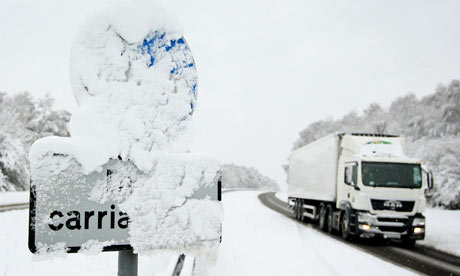
A lorry battles with snow and ice at Glenfin,
 Scotland, last Winter. Pic: Highland Radio. 
Spring is in the air, and memories of one of the hardest Winters in living memory are finally receding. The cost of December and January's severe snow and ice to the British economy ran into the billions of pounds. From the High Street to the industrial estates and, in particular, on the roads, UK businesses took a heavy hit. 

So now seems like as good a time as any to take stock of what happened - and the lessons we can learn from last Winter. 

One clear lesson we learned at iBox technology was that modern telematics and vehicle tracking devices can make an enormous contribution to vehicle and driver safety and security during cold snaps and Arctic weather. In some instances, sophisticated tracking technology can even save lives. 

Here are 5 key lessons we learned - and some tips on how to help transport companies and fleet managers  deal with the next big freeze. 

1. Location 

There's no question. All vehicles should be fitted with basic tracking that allows the fleet manager to pinpoint all his drivers’ locations. By integrating this with weather and traffic information monitored in the office, this can help the fleet manager efficiently manage his or her fleet's progress and safety during bad weather. 

"All vehicles should be equipped with basic telematics which enable you to track the exact position where your driver is located. In Arctic conditions you can also look at the weather and road conditions in that area and keep your driver up to date on changing local, situations. You can then take decisive action, either to re-route or even cancel your driver’s assignment,” says iBox director Steve Green. 

2. Duty of Care 

As a fleet manager, you have a duty of care to your drivers. Telematics help managers fulfil this responsibility during bad weather. “Telematics devices ensure you are always aware of your driver’s location, but more importantly that you can interpret what is going on at that location. If you see that your vehicle isn't moving or you detect that it has had some kind of accident you can alert the emergency services. Engine monitoring and temperature sensing within the vehicle cab can also allow the fleet manager to monitor the safety and security of a driver overnight,” explains Green. 

3. Communication with Customer 

Bad weather causes chaos for customers, as many logistics and haulage companies learned to their cost again last Winter. Delivery times can be disrupted or - even worse - cancelled. Telematics can help ease the prolems that arise. “At iBox we have a Timeline function which shows the progress of all vehicles within the fleet on a single screen. This allows managers to keep their clients up to date with the progress of deliveries,” Green explains. “Customers are always sympathetic to problems during bad weather, provided they are kept up to date with the situation. This helps ensure that always happens.” 

4. Two Way Communication

In dangerous conditions, communication between cab and office is vital. Drivers need to know what is happening back at base, and the fleet manager needs to know what is happening on the ground. It needs to be a two way conversation. 

The iBox Telemate device combines a standard Garmin Sat-Nav, Can-bus with a mobile phone and remotely updated phone book which answers automatically when called. It also allows drivers to speed dial any one of up to fifty numbers that are remotely input to the box. “In Wintry weather, the manager can forward the driver with emergency numbers. Equally, if a family member needs to make an urgent private call to the driver, they can do so,” says Green. IBox‘s ‘Task Manager’ function also allows the fleet manager to remotely update the Telemate with new or amended job or route details. “Sometimes it’s important that the driver focuses entirely on his vehicle. This allows us to send important data direct to the Sat Nav. The driver will then get a message from his Sat Nav directing him to the nearest service area or fuelling location, without having to talk directly to the office,” says Green.  

5. Remote Fuel Monitoring 

As we saw last Winter, fuel supply lines can be severely disrupted by heavy snow and ice. A telematics device can also relay fuel level information back to the fleet manager. The office is then able to compare the vehicle’s fuel needs with the location of re-fuelling locations that are stocked and open for business so as to ensure the safe completion of the driver’s journey. “If a driver is running low on fuel but is heading towards a station that has run out of fuel supply, that driver needs to know about it - and fast,” says Green. “Again the two-way nature of our communications devices mean that this information is relayed between the office and the vehicle smoothly and safely.” 


Severe Winter weather can create extreme problems for drivers and fleet managers. The kind of heavy snow and ice we saw back in December and January can cause accidents, delays, road closures and serious disruption to a transport business. Deliveries can be disrupted, drivers can get stranded - or even worse. 

That’s the bad news. The good news, however, is that with intelligent use of modern technology, fleet managers can minimize the financial - and human - cost of the big freezes. Give us a call if you want to start preparing for the next one. 
Friday, 18 February 2011

How To Stop Forklifts Being Lifted! The Genius Of Geo-Fencing

Fleet managers and vehicle owners are always facing new challenges. And we, as suppliers of tracking equipment, have to move with them.

An important recent development has been the addition of 'geo-fencing' to our vehicle tracking equipment.

Geo-fencing very simply allows users to set the geographical parameters within which a vehicle or piece of equipment should be operating. On the one hand it can show that vehicles have reached designated delivery locations. On the other hand, it can reveal that a vehicle or piece of equipment has strayed out of a designated zone, ensuring the fleet manager knows about it immediately.

At iBox technology we've seen this technology applied in a variety of ways. In the haulage and logistics business, for instance, it allows transport companies to detect - and if necessary, prove - that a delivery has arrived at the correct destination.

One example of the usefulness of this came when a delivery firm was charged a heavy penalty by a major supermarket chain for not having delivered a consignment on time. After talking to its driver, the delivery firm challenged this. They argued that he had been on the supermarket's premises, but had been held back from emptying his load by the warehouse manager's decision to give another, later delivery priority because of its perishable load. They were able to prove the driver was on the premises by showing them the geo-fencing data which showed that the lorry had arrived ahead of rather than behind schedule. The penalty was refunded.

Another example came when we fitted geo-fencing to a fleet of forklifts being operated by a warehouse company on a large, industrial estate. They had suffered a series of disappearances of their forklifts. One or two had been stolen and subsequently recovered. But others had simply gone astray. Within a week of having our geo-fencing equipment fitted, the company had discovered the cause of these mysterious disappearances.

They found that workers were using the forklifts to travel around the estate, far from where they should have been working. The new geo-fencing kept showing them leaving the designated operation zones, often to do 'private work' or even make social calls. Workers were often simply abandoning the forklift trucks at the end of the working day.

When they discovered this practice they launched a search of the industrial estate and quickly found the remaining 'lost' forklifts. Needless to say they didn't go missing in that way again - and staff didn't go wandering from their workplace as much either.

Monday, 8 November 2010

Budget Time. How Telematics & Vehicle Tracking Can Deliver Huge Savings & Efficiencies

It's that time of the year again - fleet managers up and down the country are putting together their budgets for the coming year. As we reveal in our latest press release, iBox Technology is helping companies of all sizes achieve significant savings. Here's an extract:
A whole range of clients have benefited from using iBox Technology's innovative products. These include:

- a small west country company, running a fleet of six, two-man vehicles, whose costs were slashed by an instant £8 per man, per day (£2,000 a month), by using iBox’s Trac-mate device.

- a large, urban local authority, who have been able to monitor and manage their fleet of 50 waste disposal trucks and street-cleaning vehicles, potentially saving hundreds of man hours - and tens of thousands of pounds - in the process.

- a large, 3PL provider who have used iBox’s Tele-mate device to slash their communications and phone costs as well as optimising shift patterns and highlighting driving issues within part of its 1,200 strong fleet.

“A lot of fleet managers are talking to us at this time of the year as they put together their budgets for the coming twelve months. Whatever the specifics of their fleet, there are areas where each of them can make cost and efficiency savings,“ says iBox Technology director, Steve Green.

“Whether it’s improving their trucks’ fuel efficiency via our Eco-Mate or streamlining their communication and task mangement systems via our Tele-Mate or Task-Manager, we’ve got the technology to help. And in these cost-conscious time we can make the difference between going places or going under.”

iBox Technology - Budget Time. How Telematics & Vehicle Tracking Can Transform Fleet... - MyNewsdesk

Friday, 29 October 2010

‘Task Manager’ System Delivers Big Benefits To Fleet Managers

Just issued a news release on our successful Task Manager facility.

The system, which comes as standard in each of iBox’s range of tracking ‘Mates’ and works in conjunction with a standard Garmin Sat-Nav, allows fleet managers to remotely update their vehicles with new or amended job details.

The system is remarkably simple - and efficient. As soon as the driver receives the new or amended job details - and presses ‘accept’ on the Sat Nav - he or she is given the updated destination and route details. The fleet manager is then able to track the progress of the vehicle and the new task via the iBox ‘Timeline’ display, which as well as showing the vehicle’s location, generates an Estimated Time of Arrival that is constantly updated according to traffic conditions.

“The Task Manager system brings several benefits to the fleet manager,“ said iBox Technology director Steve Green. “First and foremost, it removes the need for the fleet manager and driver to be exchanging telephone calls, something that can be hit and miss at the best of times. The manager can amend and add to the scheduled jobs remotely, without having to speak to the driver. And they can do that at any time of the day or night,” says Green.

The system dovetails perfectly with IBox Technology’s other features, in particular its Timeline display, which shows the progress of all vehicles within the fleet on a single screen. “Thanks to the Timeline display, this system allows the manager to monitor the progress of tasks, right down to the driver’s ETA at the client. This also means that the manager can be in direct contact with the client, keeping them up to date with the driver’s progress. It brings a huge improvement in efficiency and communication and helps put the customer’s mind at ease.”

“It’s proving a real hit with our clients, especially 3PL providers,” said Green. “It’s also got significant potential benefits in sectors such as the service industry. So, for instance, a client who has requested a maintenance or service specialist can be kept up to date with precise details about their ETA.”
iBox Technology - New ‘Task Manager’ System Delivers Big Benefits To Fleet Managers - MyNewsdesk

Tuesday, 14 September 2010

New Version of iBox technology's 'live' Can-bus winning orders


Sales of our unique 'live' Can-bus device are exceeding our expectations. Customers are telling us that they like the fact it delivers 'today's data - today'. Steve Green has talked about it in detail in a new Press Release. He says: 

“As far as we aware, ours is the only system that gives you live data, connecting the cab to the manager’s office in real time. With our live interface it’s all there for you. If you click on the icon or link for a particular vehicle it will show you the fuel consumption, total fuel used, the average speed, its location, everything you need to know.

A transport manager can take a look at this and see, for instance, that a driver has made six harsh braking manoeuvres in the space of half an hour. He can ring the driver up immediately to find out if there’s a problem.

It still gives the fleet manager the option of generating a weekly report and will provide him or her with a plethora of information. But the difference is that, rather than waiting for the start of a new week to analyse last week’s data, we provide immediate information. We provide today’s data, today.”

Read about it in more detail here.